💧 Long before mechanical clocks, the Greeks measured time with the clepsydra, a water clock. Early versions were simple dripping bowls, but their irregular flow made them inaccurate.
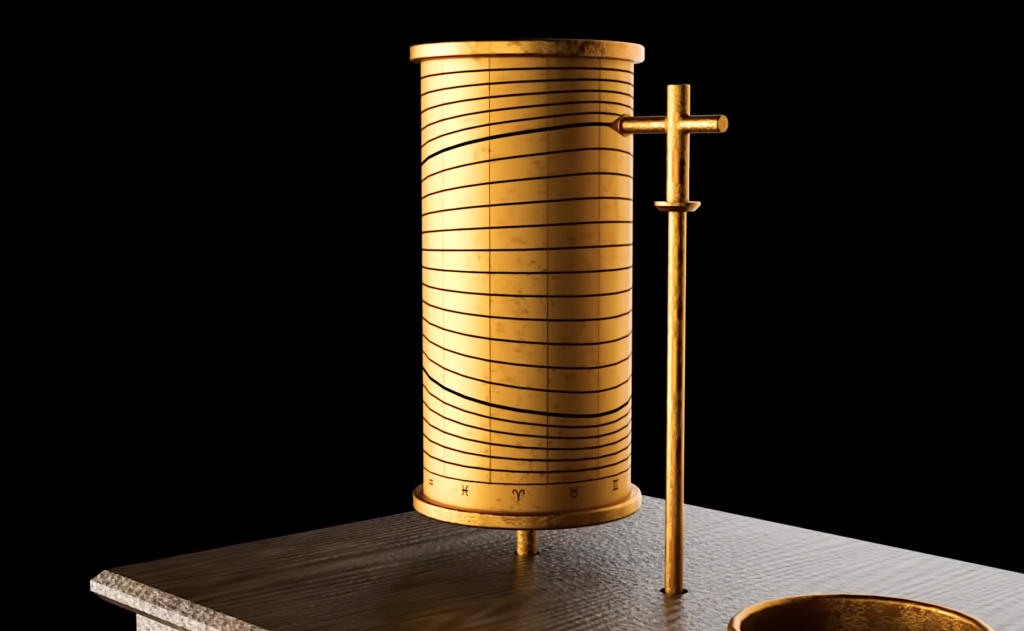
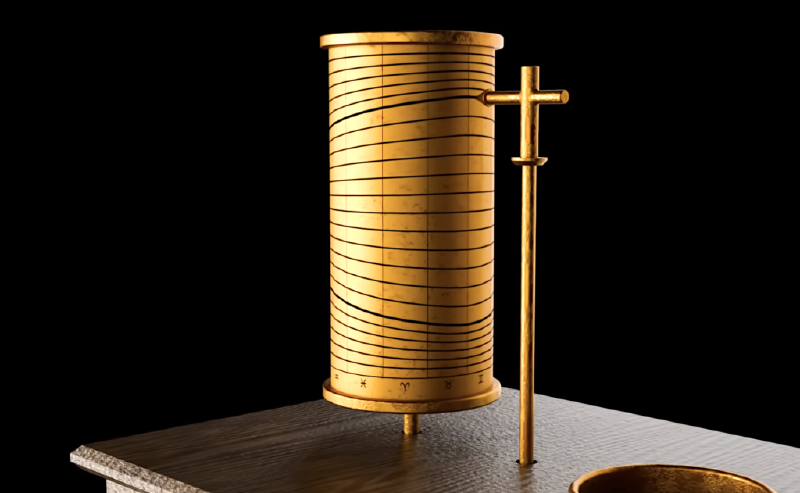
In the third century BC, inventor Ctesibius improved the design. A feeding reservoir kept the water level steady; a float moved an hour indicator, and a siphon automatically emptied the system every 24 hours. A water wheel and gears also rotated a cylinder representing months and hours, adapting to changing daylight duration.
⚙️ The author explains that this mechanism was an early form of automation: it worked continuously without human intervention. According to the article, it kept more accurate time than any other device for about 1,800 years, until the pendulum clock appeared.
💡 Explanation in a nutshell#
The clepsydra converted a steady water flow into measurable movement. Water lifted a float; the float moved a pointer; and gears turned that movement into a time display. It was a very early mechanical computer.
More information at the link 👇