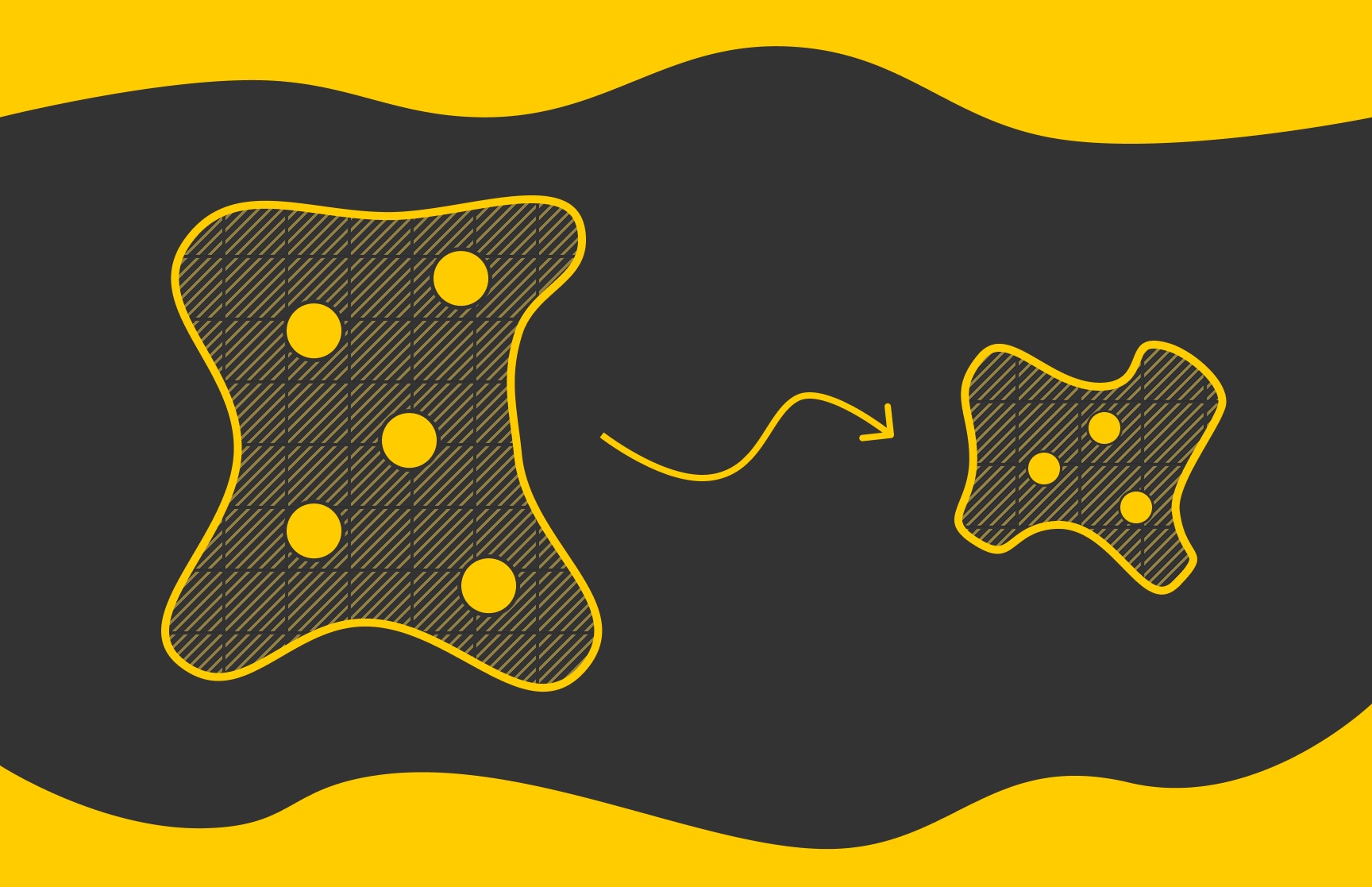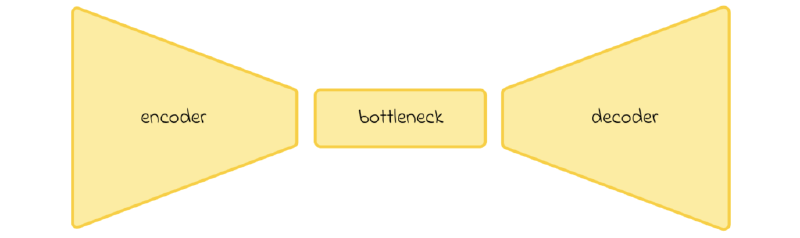
Autoencoders are neural networks that learn to compress information and then reconstruct it. Their architecture has three parts: an encoder, which reduces the data; a bottleneck, where the compressed representation lives; and a decoder, which tries to recover the original input. 🧠
During training, they do not need labels: the model compares the reconstructed image with the original and adjusts its weights using reconstruction loss, commonly mean squared error (MSE). The goal is to preserve important features with far fewer values. For example, Stable Diffusion compresses 512 × 512 × 3 images into 64 × 64 × 4, a 48× reduction. 📉
💡 Explanation in a nutshell#
Imagine a suitcase: the encoder keeps what matters, latent space is the compact suitcase, and the decoder tries to rebuild what was inside. If the suitcase is too small, information is lost; if it is too large, there is little compression.
Autoencoders can also remove image noise, fill missing regions, or erase objects. However, MSE can produce blurry edges, so advanced variants use losses that better match human perception.
More information at the link 👇