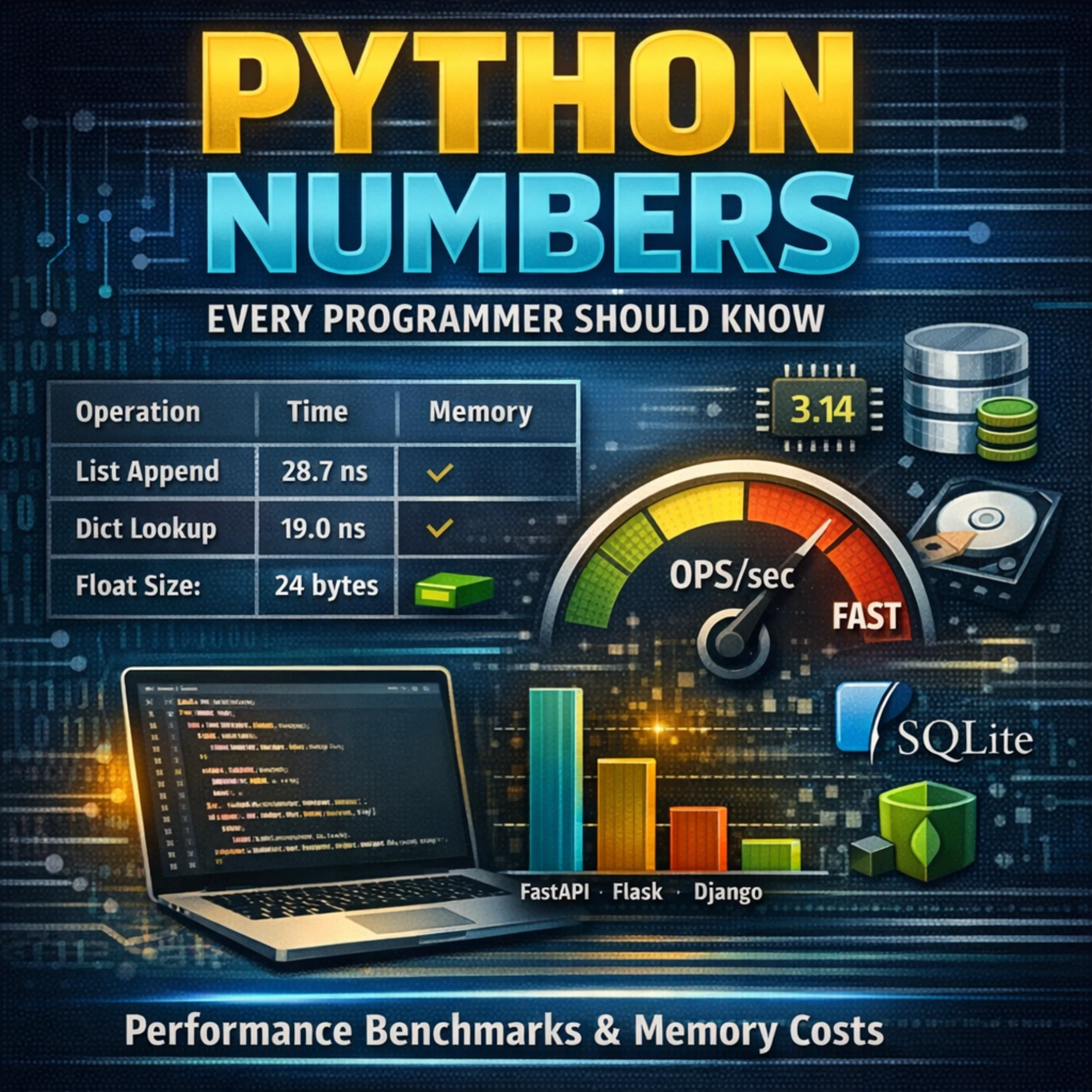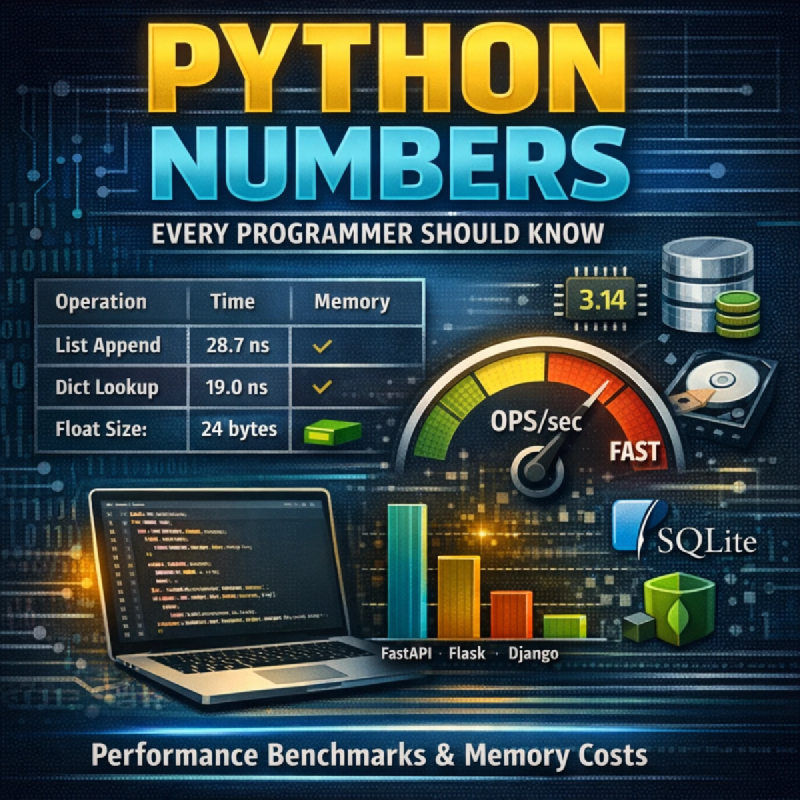
🐍 How fast is Python, really?
Did you know opening a file takes 10x longer than a simple SQLite select? Or that importing FastAPI costs 104 ms, while summing 1,000 integers takes only 1.9 μs?
Michael Kennedy published a benchmark cheat sheet for Python 3.14.2 on a Mac Mini M4 Pro. Numbers organized by category:
⏱️ Basic operations:
- Attribute read: 14 ns
- Dict lookup: 22 ns
list.append(): 29 ns- f-string formatting: 65 ns
- Exception raised + caught: 140 ns
💾 Memory:
- Float: 24 bytes
- Small int (cached): 28 bytes
- Empty string: 41 bytes
- Empty list: 56 bytes
- Empty dict: 64 bytes
🌐 Web frameworks (req/sec):
- Starlette: 124.8k | FastAPI: 115.9k | Django: 55.4k
📦 Key tip: __slots__ dramatically reduces memory when storing thousands of class instances.
Quick explanation#
Just as systems programmers know RAM is 100x faster than disk, Python developers should internalize their own reference numbers. This guide answers: dict or set? Is orjson worth it? When does async actually matter? With this data, you make informed performance decisions.
More information at the link 👇