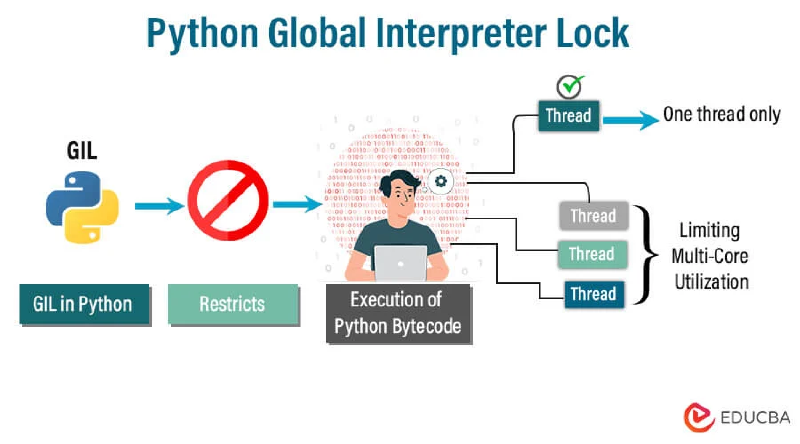
🚀 What does the end of the GIL in Python really mean?#
Python is entering a new era: the removal of the Global Interpreter Lock (GIL) promises to transform how we build applications, especially in AI, data science, and high‑performance systems.
💡 Key points
- 🧵 Real multithreading: Python will be able to use multiple cores without a global lock.
- ⚙️ Parallel performance: CPU-bound tasks scale almost linearly with more cores.
- 🧱 Deep ecosystem shift: libraries and extensions will need to adapt.
- 🔒 More power, more responsibility: classic concurrency challenges appear (race conditions, deadlocks).
🧩 Explanation in short#
Imagine Python is a kitchen with many chefs, but only one could use the stove at a time.
That was the GIL.
With its removal, all the chefs can cook at the same time, making better use of the kitchen (your CPU).
Result: faster, more efficient programs, especially for heavy tasks like training models or processing large volumes of data.
More information at the link 👇

Also published on LinkedIn.